Haven't you ever wondered why, according to common internet propagation sites, the best radio weather should actually be prevailing? The explanation is quite simple. Those who publish these values often do not know what they are actually publishing. Because there are local current values, local daily values, global current values, global daily values, etc., and they are cheerfully mixed up. Furthermore, geographically bound values such as the MUF are provided without the corresponding location. Thus, the phenomenon arises where half the world uses the MUF of Boulder (Colorado) in the USA.
On top of that, some countries have stopped publishing values because they can also be used for military actions (CIS) or they are classified as economically unnecessary (USA). PropMagic aims to draw the correct values for your location from truly reliable sources. These include GFZ Potsdam, NOAA, SIDC, GIRO, URSI, ESA, Weatherapi, and others.
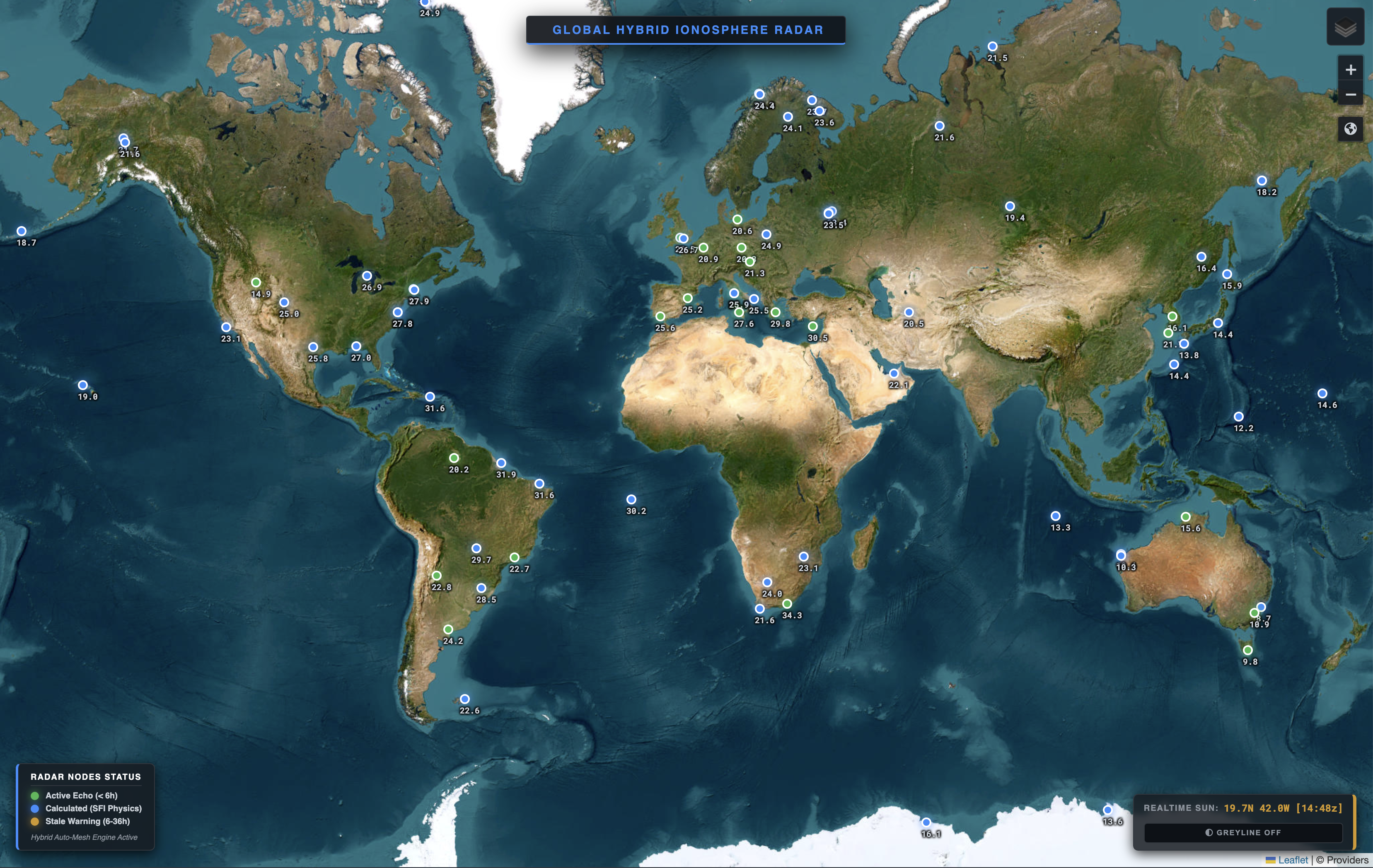 Global overview of ionosonde stations (green = active, blue = dead station, calculated)
This annoyed me, because there is probably nothing more frustrating than packing the car with the necessary equipment only to listen to static on site. Thus, the idea was born to develop a well-founded propagation system that provides well-structured tactical dashboards (which can be accessed both on the computer in the shack and on a tablet as a field station) in order to assess propagation conditions.
What is necessary for this?
Let's first distinguish between two things: scientific findings and reality. What I mean by this is: According to exact values at my location, there should not be good propagation conditions. But if I look at spot lists, all bands are currently humming. Why?? The answer is logical: The lack of ionosonde stations has created a patchwork. This can only be countered by additionally drawing on "real" data. This real data consists of the reception lists provided by manual or automated spotters and Reverse Beacon Networks.
The ionosonde stations in Europe are quite comprehensive, but rather poorly distributed in the rest of the world. In the following illustration, current (real / currently measured) values are shown in green. Blue dots are calculated values (derived from the SFI) at locations of currently "dead" ionosonde stations, which usually deviate very strongly from reality, because formulas do not know the current values of solar physics.
Thus, it has proven effective to marry the scientifically determined values with the real values determined from the spot lists, which ultimately provides an excellent overview.
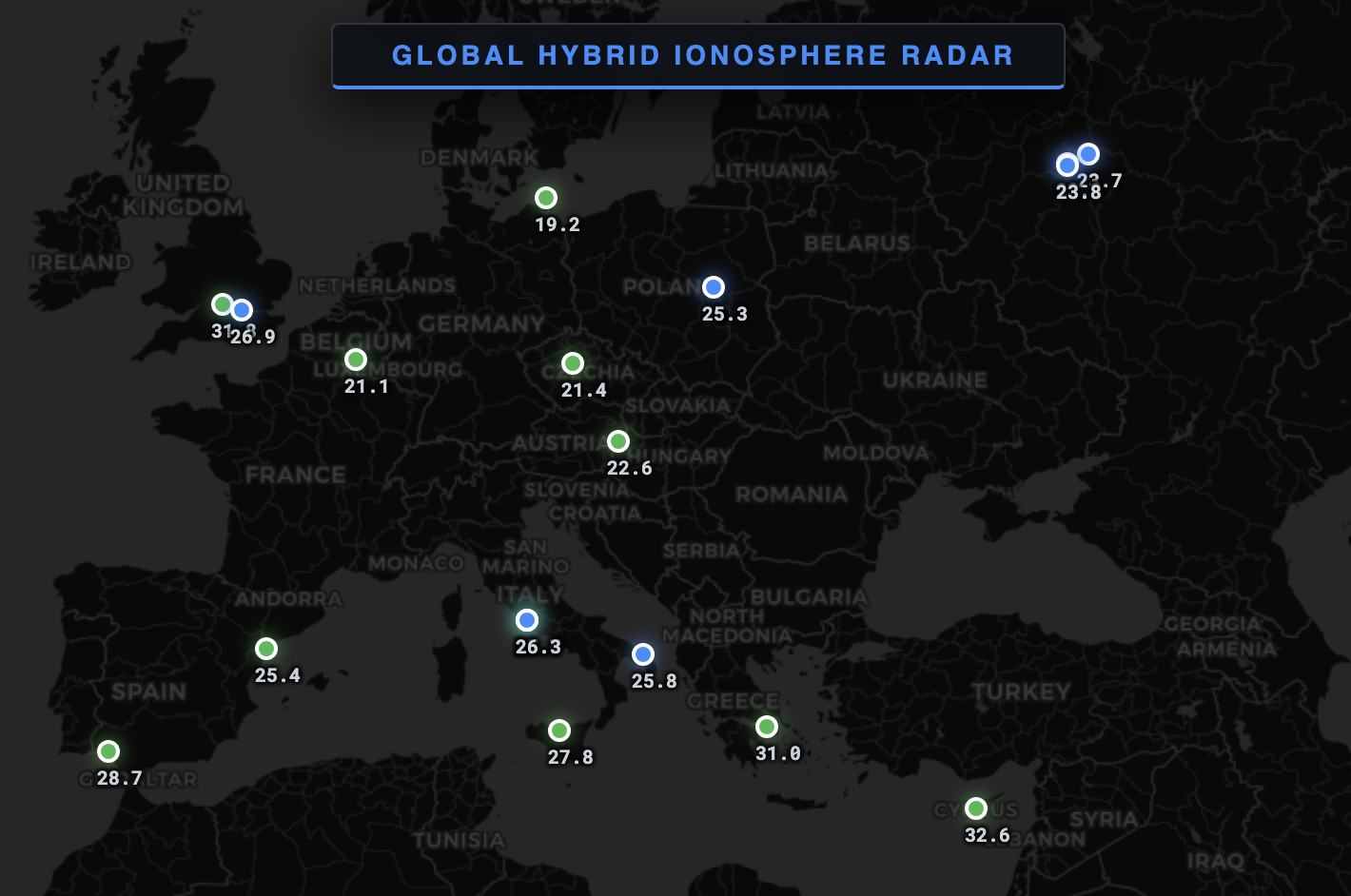 Station coverage Europe
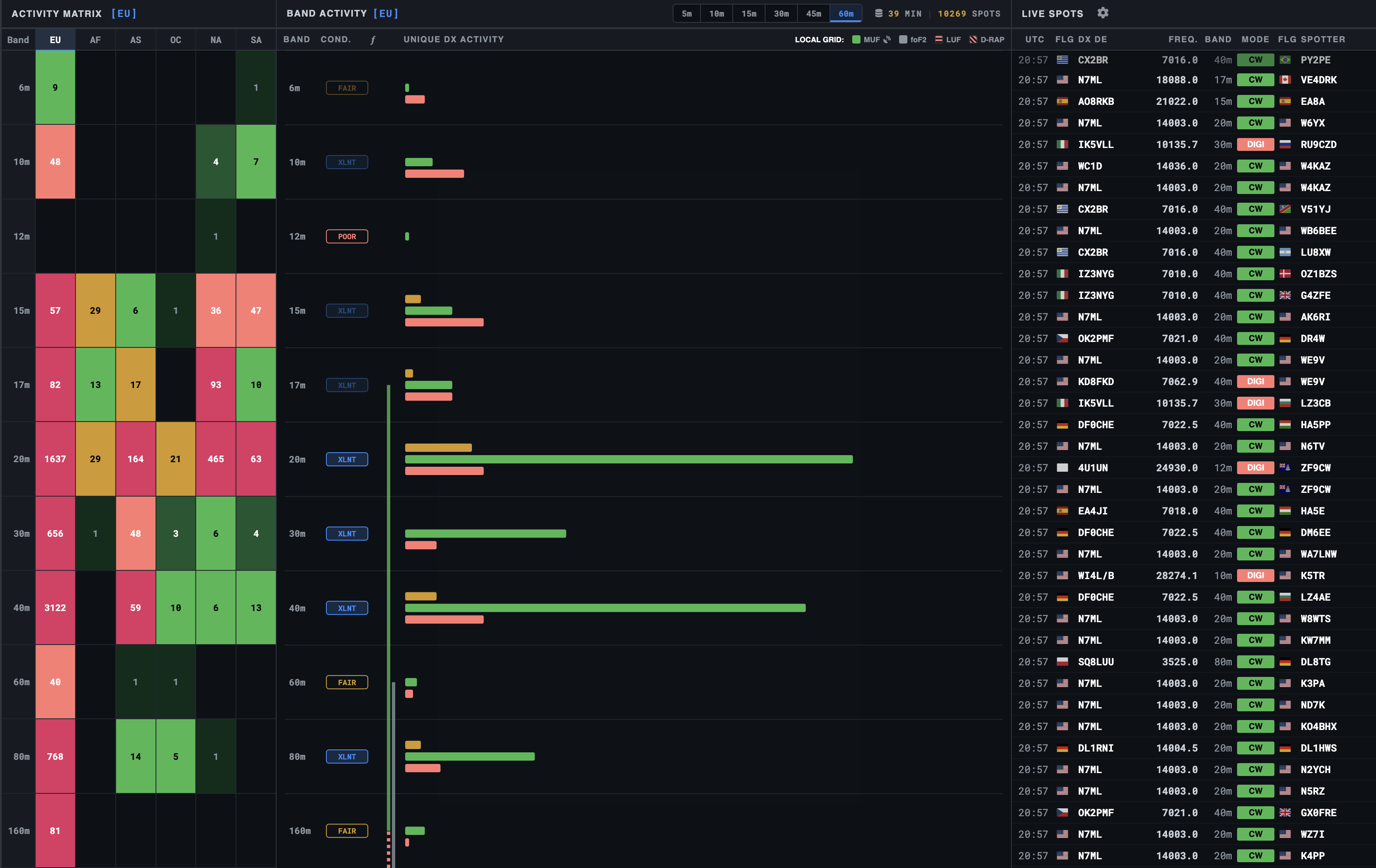
But MUF is not everything. There are also a multitude of values provided, for example, by the GFZ in Potsdam. An overview of the values can be found in PropMagic in the form of past datasets and predictions. In addition to the current data, the spot lists come into play, in which reality is better mapped. How else, if not by the spot lists, can I detect sudden band openings? The scientific measured values change at best every 3 hours, for MUF every 2 - 30 minutes. The spot lists represent the exact moment.
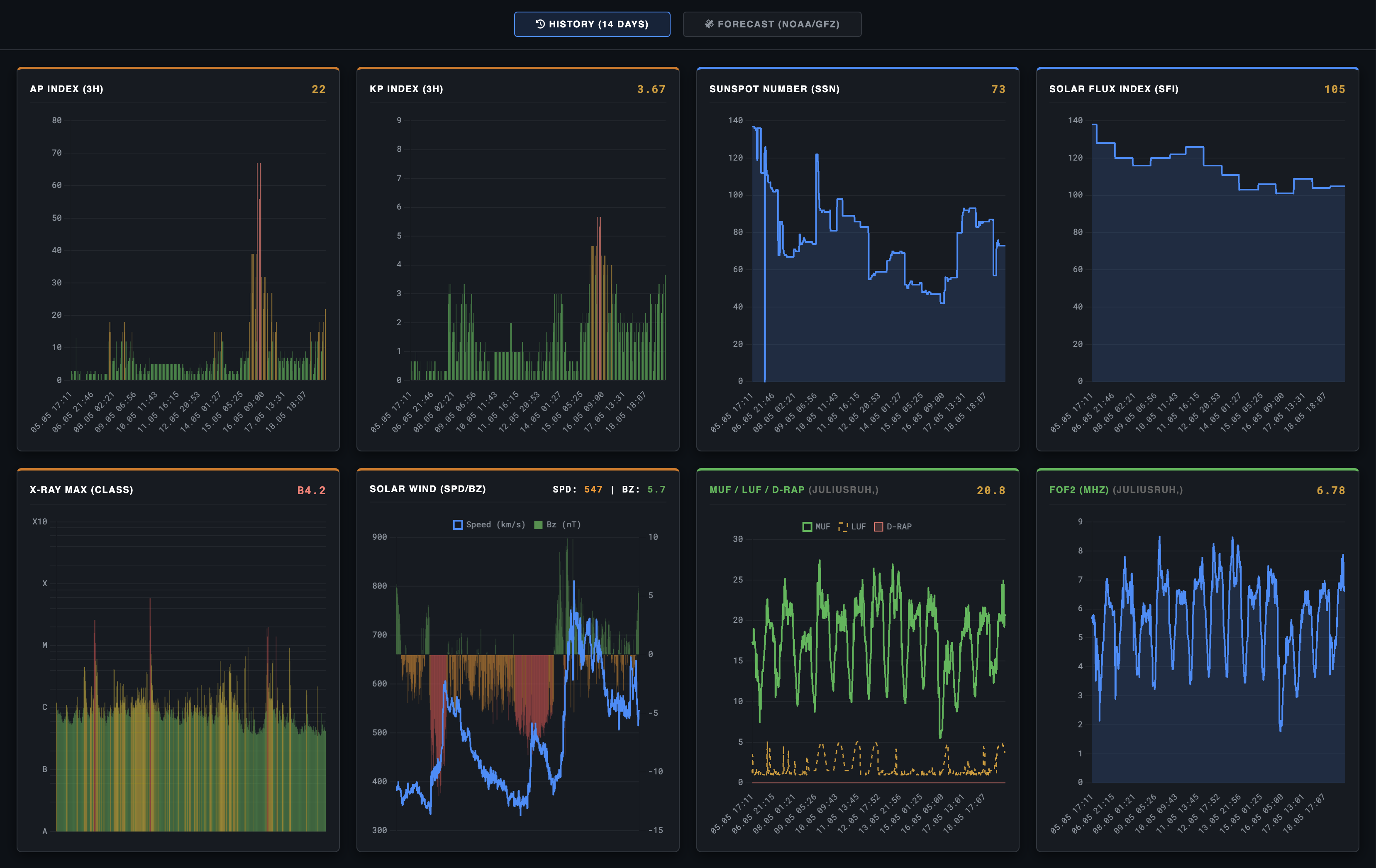 Detailled statistics historically from the last 14 days
On the topic of propagation, I have written a 3-part scientific treatise, to be found here in the blog as "The PropMagic Bible Part I - III".
But what does PropMagic actually represent? Fundamentally, PropMagic is location-oriented. That means the grid defined by the operator is the basis for all calculations concerning the location. I.e., weather, sunrise and sunset, MUF / foF2, country, and continent. Furthermore, PropMagic attempts to display things clearly without overloading the website.
-
Constant display (header and footer) HUD of the most important parameters and values for the operator. This includes the temperature in °C and °F, local and UTC time, sunrise and sunset, SFI, SSN, kp, ap, country, location, and which spot server is currently being used.


-
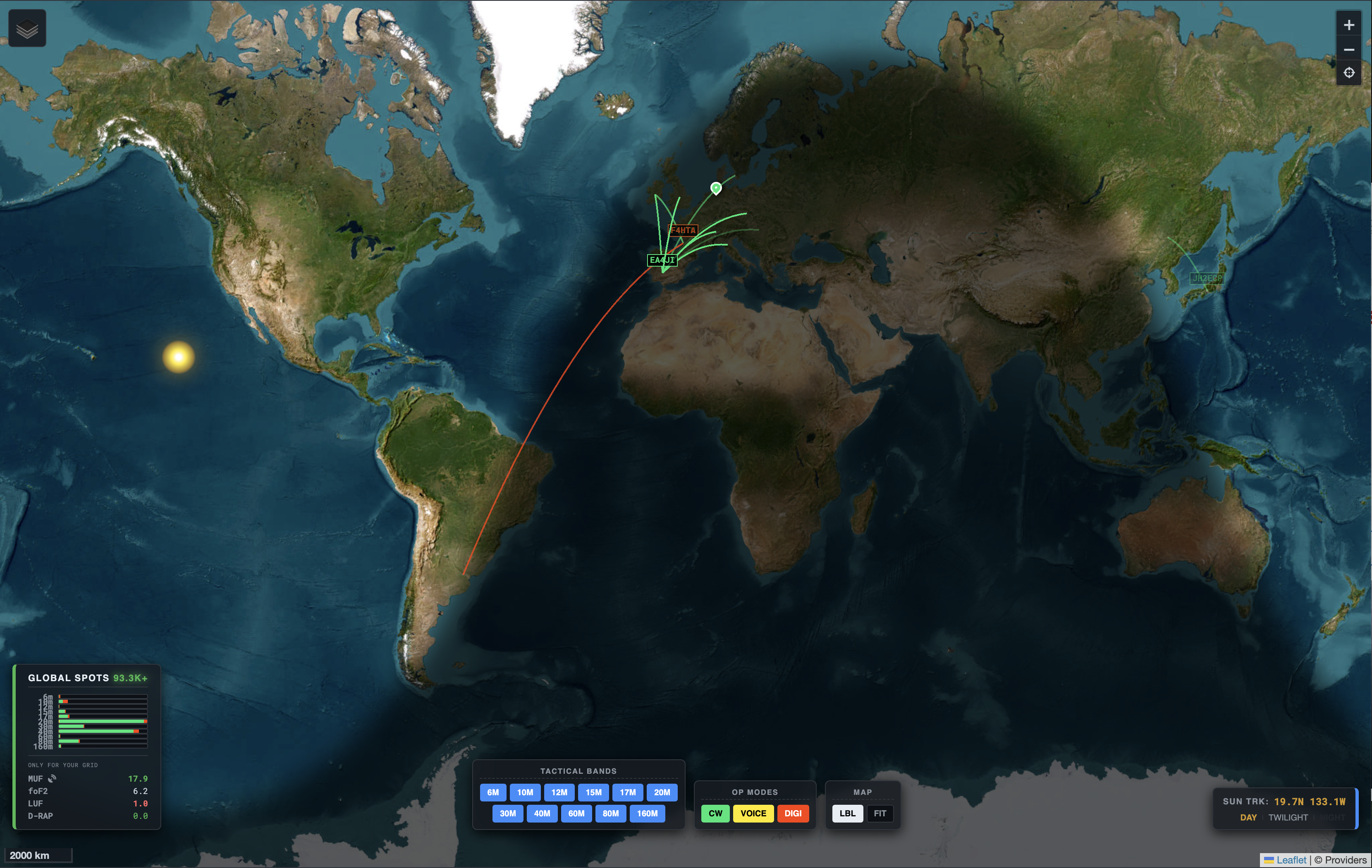
A Greyline Visualization What communication is taking place anywhere in the world via HF, on different bands and modulation modes. The viewer can choose between a wide variety of bands, modulation modes, and display styles. Of course, the graphic is animated. The transmitting station is displayed with its callsign, the receiving station (spotter) only as an endpoint.
-
The Animated Heatmap It took quite a bit of brainpower and programming effort to achieve a clear presentation, to realize as many observation vectors as possible, but also to make filters (band, continent, modulation mode) available so that one can concentrate on what is currently essential. I can thus see the activities per band, but also look at the communication between continents and continents individually. By restricting the timespan, I can detect bursts that point to a Sporadic-E or Aurora event.
-
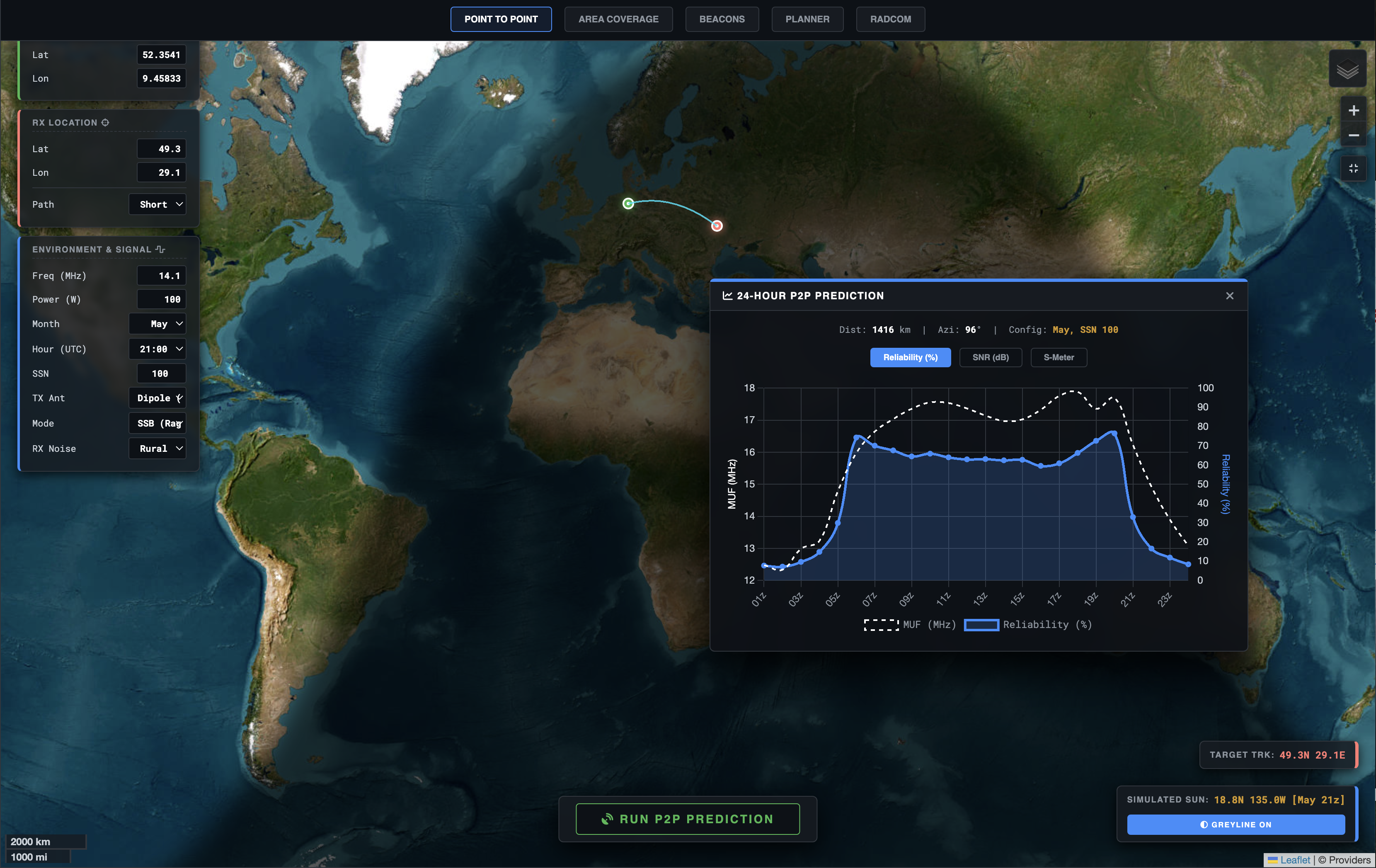
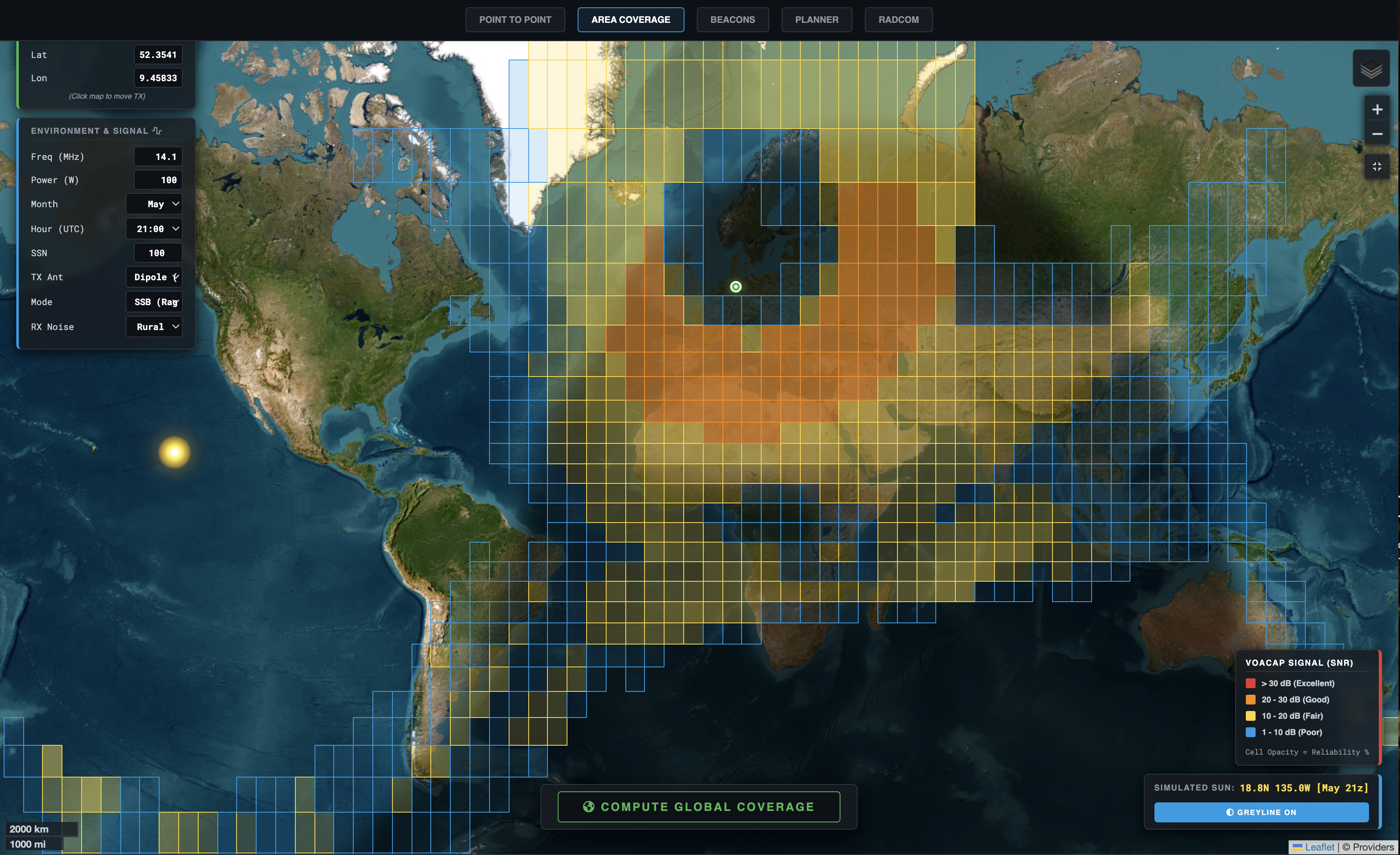
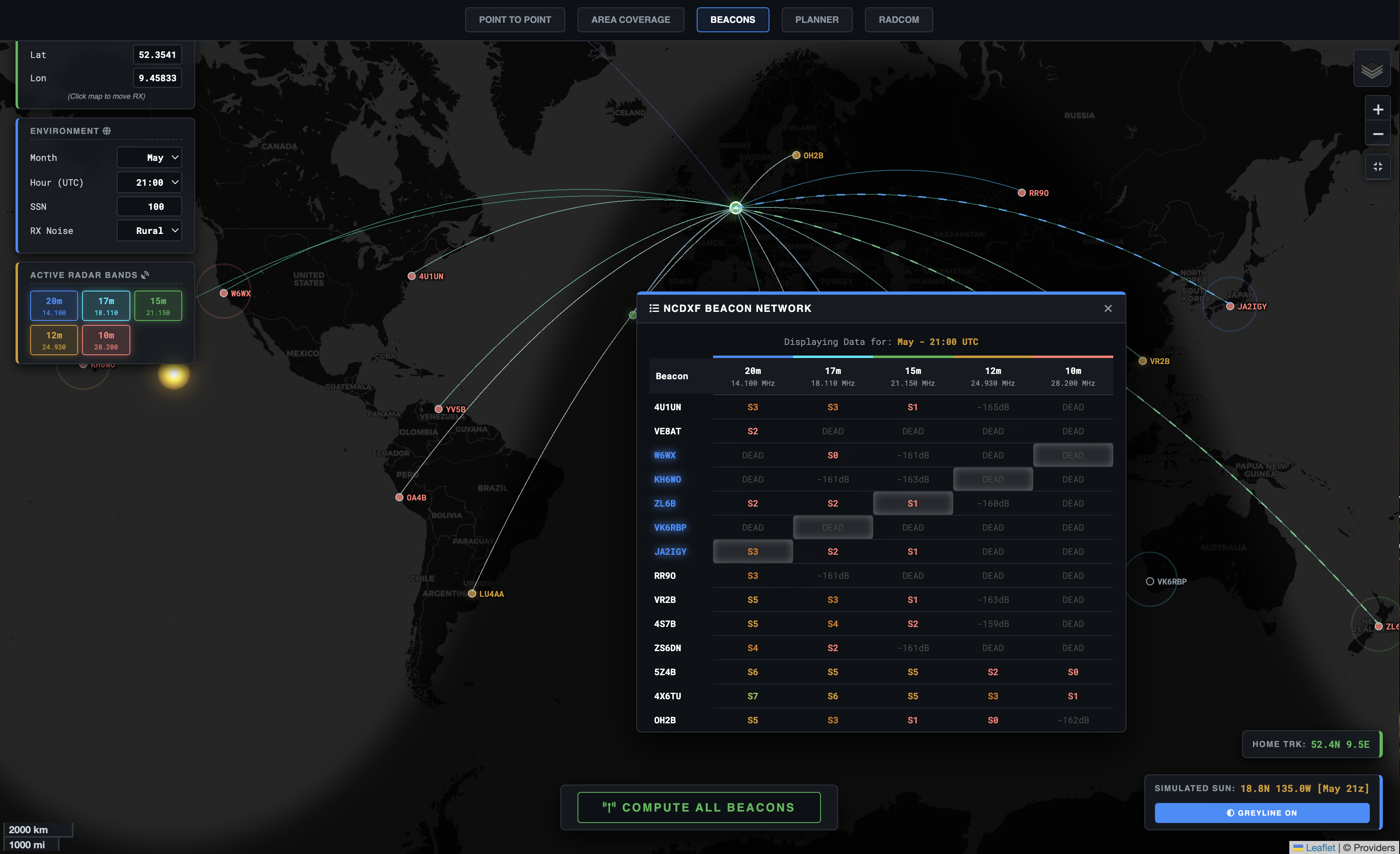
ITU Prediction Since the VOACAP Engine is already relatively old, the more modern ITU Prediction Engine (ITU's ITURHFPROP ITU-R P.533-14) was used here. This results in five different calculation options: Point to Point, Area, Beacons, Planner, and Radcom. Most parameters are freely selectable.
With the Point to Point calculation, it is calculated between two points when, at which frequency, and with which antenna at what noise level, which results can be expected.
The Area Coverage maps whether a connection (and to where) is theoretically possible with the selected parameters at the chosen time.
The evaluation of the NCDXF Beacon Network is another instrument to determine propagation.
The Prediction Planner provides the ability to execute a pre-made or custom-created list to obtain the corresponding predictions for individual targets.
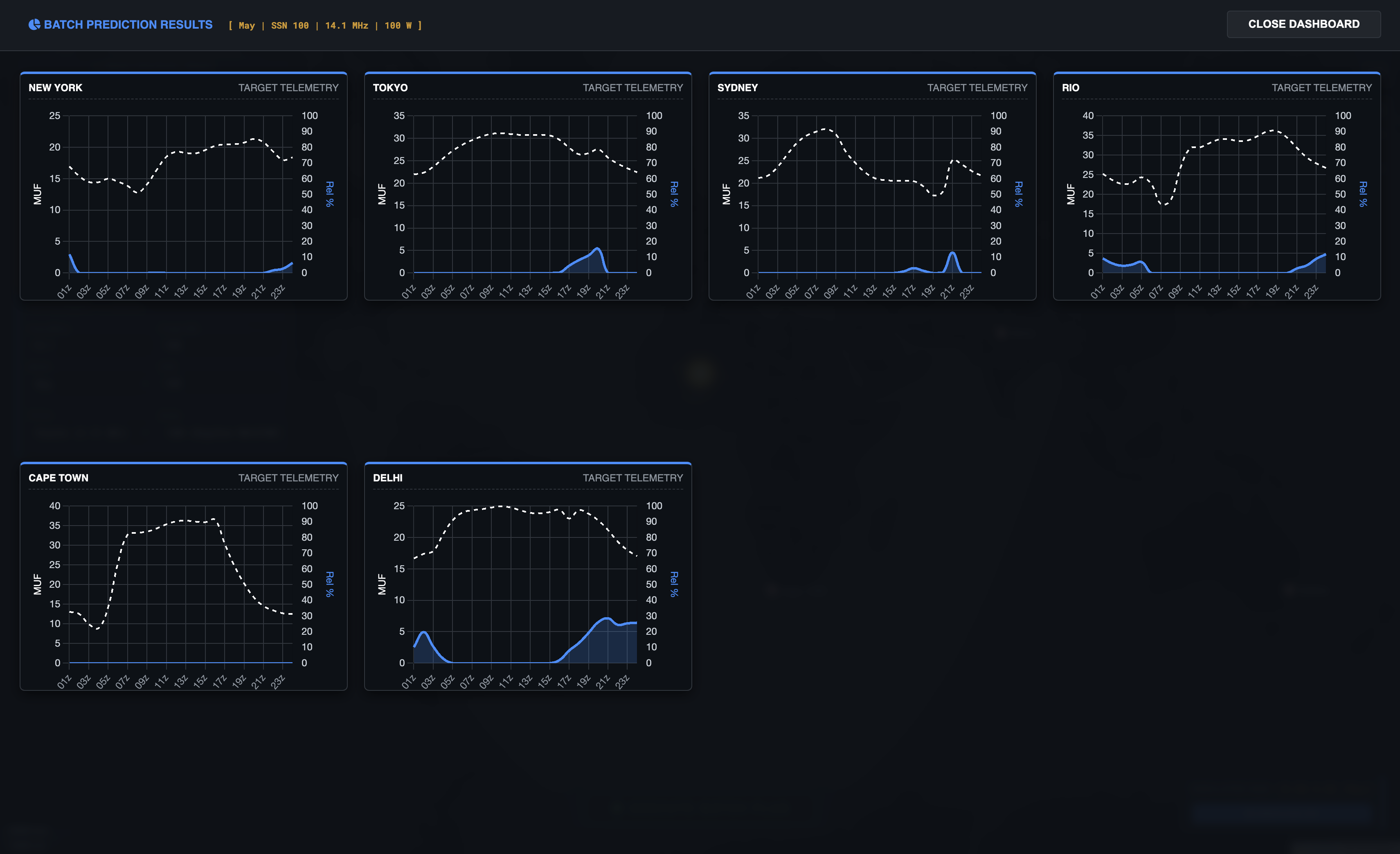
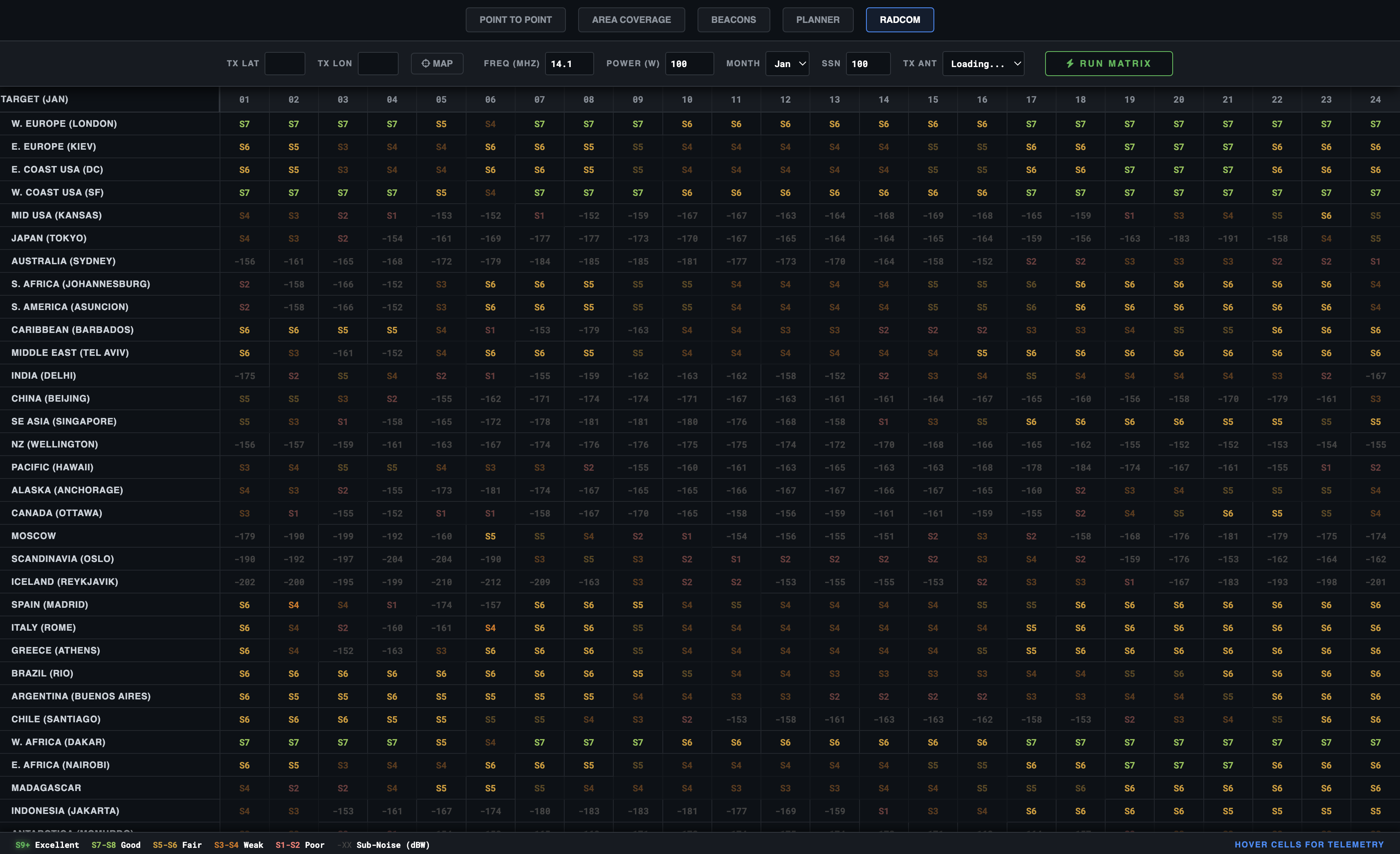
The RadCom Planner corresponds to the propagation list for 32 targets in a 24h grid, published monthly by the Radio Society of Great Britain in their magazine (RadCom).
-
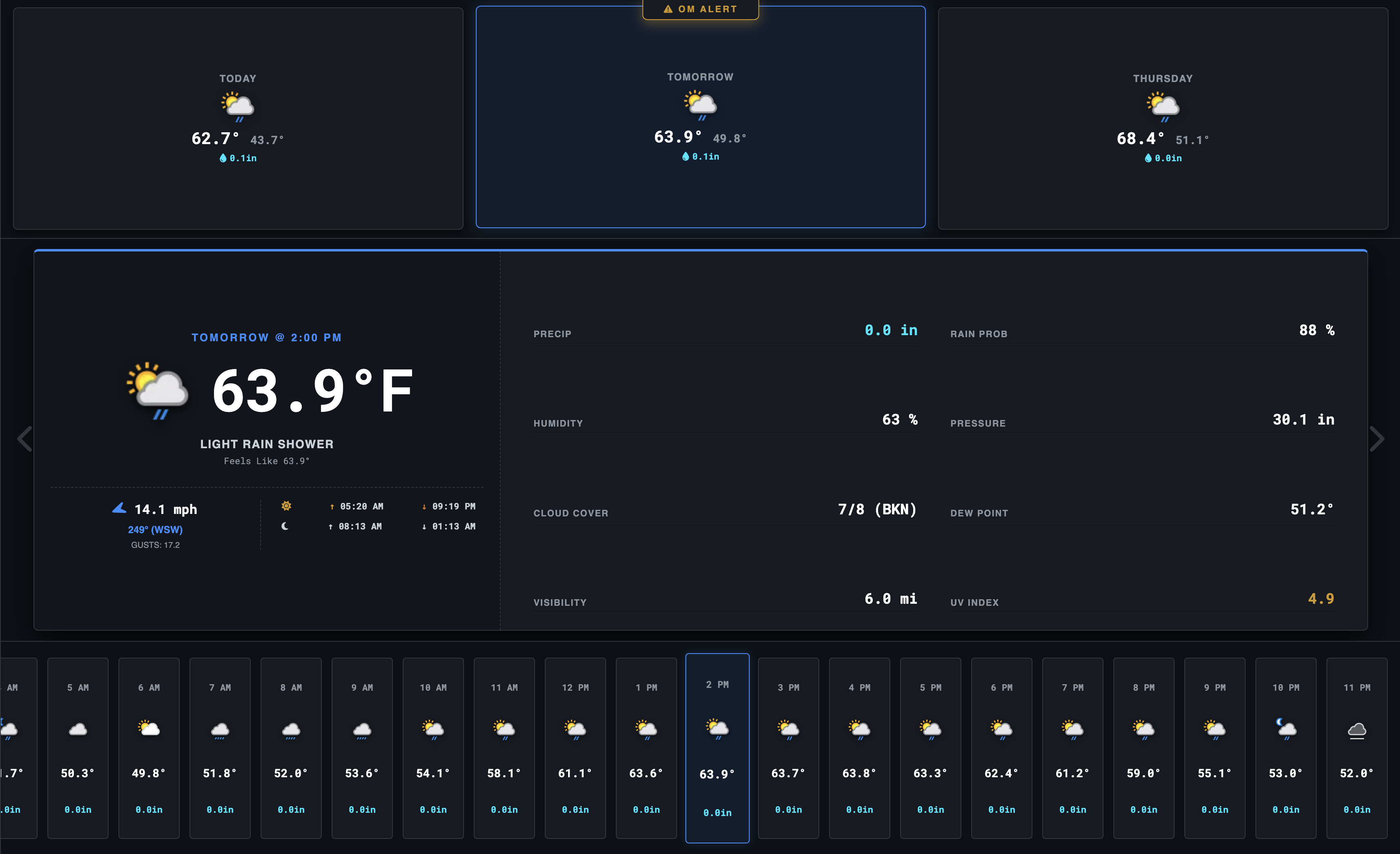
The Weather PropMagic additionally outputs a 3-day weather forecast with warnings for the operator by the local authorities and by calculation. The highlight, however, is that with a mouse click all values are converted from metric to imperial, so that you don't always have to look for conversion tables during a QSO.
Disclaimer: PropMagic is a commercial SaaS (Software as a Service) platform that claims neither completeness nor accuracy of the data, as it uses external data sources. Furthermore, a strict disclaimer of liability applies, as every user must be aware that the offered data is collected neither by DXScout nor by PropMagic itself. Common sense and sound judgment apply.